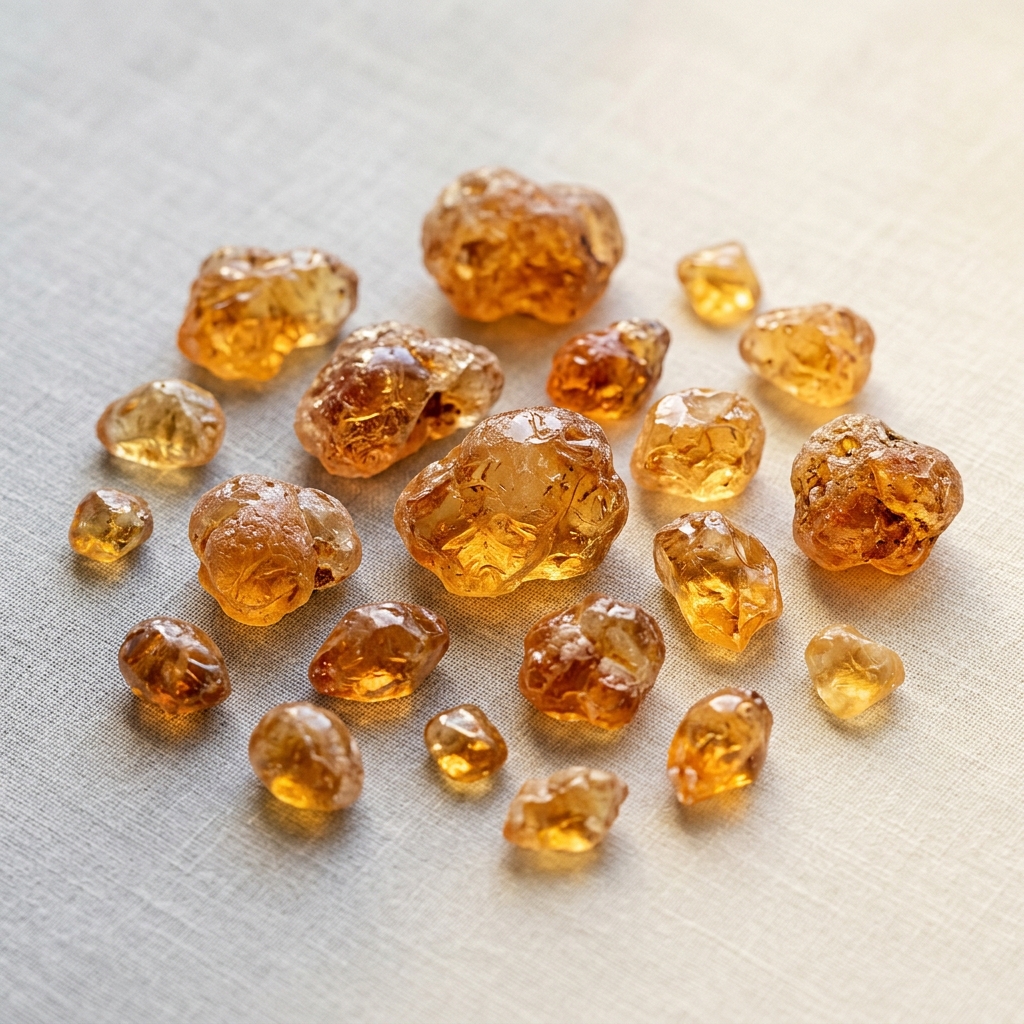
Arabic Gum is a natural, water-soluble fiber harvested from the sap of the Acacia tree — most commonly taken as a daily supplement for digestive and gut-health support. It has no flavor of its own, dissolves fully in water, and has been used as a dietary fiber source for centuries across the Middle East and North Africa.
Where does Arabic Gum come from?
Arabic Gum (also called gum acacia or gum arabic) is the hardened sap that forms naturally on the bark of Acacia senegal and Acacia seyal trees — documented in detail on Wikipedia's overview of gum arabic. It's harvested by hand, dried into crystals, and then milled into a fine powder — the form most supplements, including Sihatree, use.
What are the benefits of Arabic Gum?
- Digestive support — as a soluble prebiotic fiber, it feeds beneficial gut bacteria.
- Gut comfort — commonly used to ease bloating and support regularity.
- Low glycemic impact — unlike many fiber sources, it has minimal effect on blood sugar.
- Neutral taste — mixes into water, tea, or smoothies without altering flavor.
How much Arabic Gum should I take daily?
Most adults start with 5–10 grams per day, mixed into a glass of water, and gradually increase to 15–30 grams as tolerated. Starting low and increasing gradually helps avoid initial bloating as your gut adjusts to the added fiber. Splitting the dose across two servings — once in the morning and once in the evening — tends to be gentler than taking the full amount in one sitting, especially in the first week or two.
Arabic Gum vs. other fiber supplements
Arabic Gum isn't the only soluble fiber on the market, and it's worth knowing how it compares to two common alternatives:
- Arabic Gum vs. psyllium husk — psyllium is a stronger bulking agent and tends to swell more in the gut, which some people find heavier or harder to mix smoothly. Arabic Gum dissolves fully and clear, with a lighter, more gradual fermentation profile that many find easier to tolerate day to day.
- Arabic Gum vs. inulin — inulin is another prebiotic fiber, but it's more likely to cause gas and bloating in sensitive individuals due to faster fermentation. Arabic Gum's slower fermentation rate is one reason it's often recommended as a gentler starting point.
Neither is objectively "better" — they suit different needs, and some people even rotate between fiber types for variety.
Arabic Gum and satiety
Soluble fibers like Arabic Gum absorb water and form a gel-like texture in the gut, which is one reason fiber-rich diets are generally associated with feeling fuller for longer between meals. This isn't a weight-loss claim specific to Arabic Gum — it's a general property of soluble fiber — but it's a big part of why people fold it into a daily routine rather than taking it occasionally. Mixing it into a glass of water 20-30 minutes before a meal is the most common way people use it for this purpose.
Who should be cautious with Arabic Gum?
Arabic Gum is well-tolerated by most people, but as with any fiber supplement, a few groups should check with a doctor before starting: those with an existing gastrointestinal condition, anyone currently on medication where fiber timing can affect absorption, and pregnant or breastfeeding women who haven't cleared new supplements with their healthcare provider yet. If you notice unusual bloating, cramping, or discomfort beyond mild initial adjustment, scale back the dose or pause and consult a doctor.
Is Arabic Gum the same as gum arabic?
Yes — Arabic Gum and gum arabic are the same ingredient, just two common names for the dried exudate of the Acacia tree. You may also see it labeled gum acacia on ingredient lists.
How to take Sihatree's Arabic Gum
Stir one scoop into 250–300ml of water or your drink of choice, once or twice daily. It dissolves fully within seconds and carries no added flavor, so it works in anything from plain water to your morning coffee.
Storage and shelf life
Keep Arabic Gum powder in a cool, dry place, tightly sealed after each use — moisture is the main thing that shortens shelf life, since the powder can clump if exposed to humidity. Stored properly, an unopened pack typically keeps well for well over a year; check the printed best-before date on your specific pack for the exact figure. There's no need for refrigeration.
Is Arabic Gum halal, and is it available in Malaysia?
Yes — Arabic Gum itself is a plant-derived fiber with no halal concerns, and Sihatree's Arabic Gum Powder is Halal-certified for the Malaysian market. It's sold locally through retail platforms such as TikTok Shop and Shopee, alongside wholesale supply for Malaysian retailers and distributors. See our full Halal certification guide for how to verify this yourself, or our buying guide for exactly where to order from.