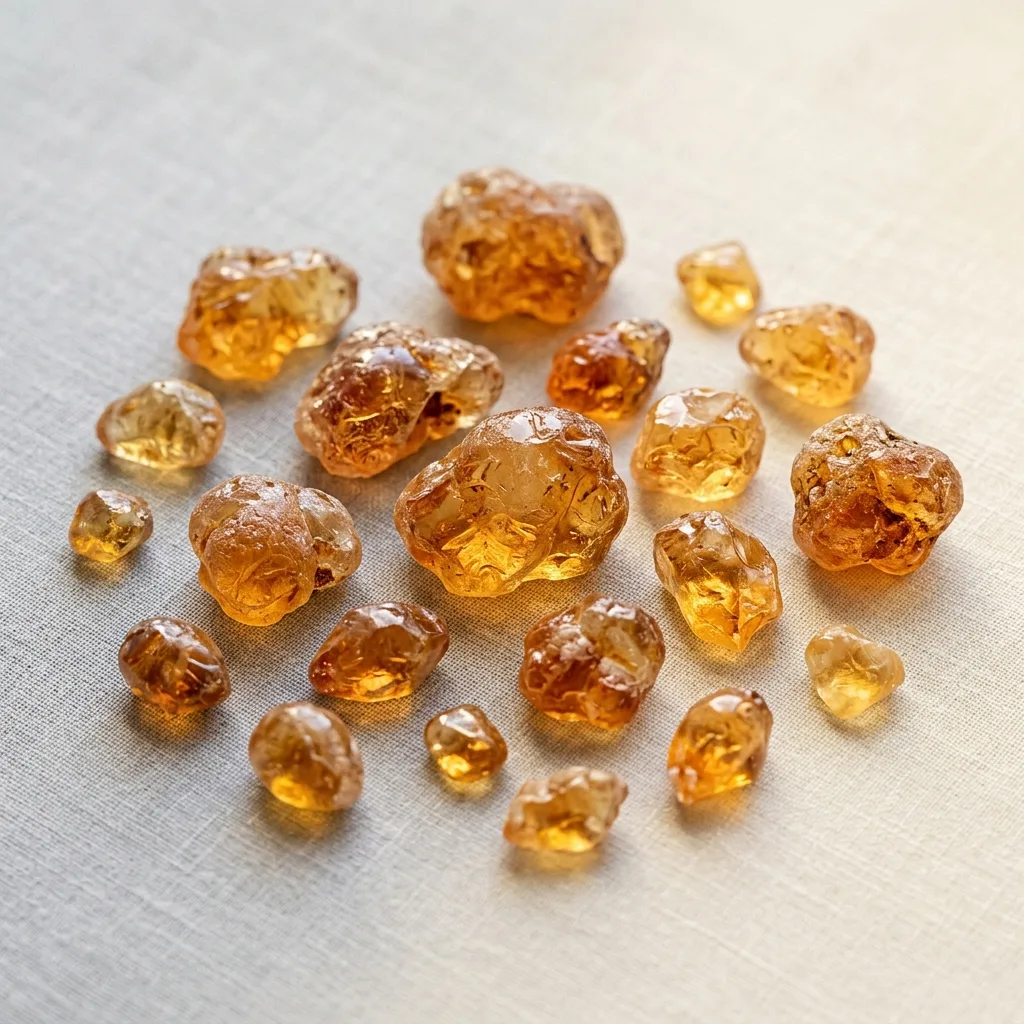
Arabic gum is a natural humectant that has traditionally been used in cosmetics for its moisture-binding, film-forming texture, but Sihatree's Arabic Gum Powder is formulated and sold as a food and drink supplement, not a cosmetic product. Here's what the ingredient is known for on skin, a simple DIY approach some people try, and the precautions worth knowing first.
Is Arabic gum good for skin?
As a dissolved gum, Arabic gum forms a thin, smooth film that binds moisture at the surface, which is why it has a long history of use in traditional and commercial cosmetic formulations, alongside its more common use as a food additive.
Why it's used in cosmetics
Its humectant properties, neutral scent, and smooth texture make it a useful binding and texturising ingredient in some lotions, masks, and hair products — this is a well-documented general property of the ingredient, covered in Wikipedia's overview of gum arabic.
What it can and can't do for skin
Moisture and texture benefits
The film it forms can leave skin feeling smoother and temporarily more hydrated at the surface — a cosmetic texture effect, not a treatment for any underlying skin condition.
Limits — not a treatment for skin conditions
Arabic gum is not a medical or dermatological treatment. For acne, eczema, or any diagnosed skin condition, see a dermatologist rather than relying on a home ingredient.
How to use Arabic gum on skin
1. Mix
Stir a small amount of powder into water until it forms a smooth, spreadable paste.
2. Apply
Spread a thin layer on clean skin, avoiding the eye area, and leave for 10-15 minutes.
3. Rinse
Rinse off with lukewarm water and pat dry — no scrubbing needed.
4. Patch test first
Always test on a small area of skin 24 hours before wider use.
Sihatree Is Made for Drinking
Our Halal-certified Arabic Gum Powder is formulated as a food and drink supplement, in 5 flavours.
Common DIY uses people try
- Face mask base — mixed with water alone, or combined with other natural ingredients.
- Hair mask — used for a smoothing, film-forming effect on hair strands.
- Craft and natural glue — a traditional non-cosmetic use, unrelated to skin or food use.
Precautions before trying it on skin
Before you try it
- Patch-test on a small area first and wait 24 hours before wider use.
- Avoid it if you have a known Acacia or plant allergy — the same caution as with ingestion.
- Stop immediately if you notice redness, itching, or irritation.
- It is not a substitute for advice from a dermatologist for any diagnosed skin condition.
Buying genuine Arabic gum for any use
Whichever way you plan to use it, confirm any product is Halal-certified and buy through a trusted, verified provider — see our buying guide for official channels across Malaysia.
Arabic gum's cosmetic history is real — just remember Sihatree's pack is formulated, tested, and sold for drinking, not for your skin.