Arabic gum is essentially pure soluble fibre, which is why it's very low in calories, carries no meaningful protein or fat, and behaves differently from digestible carbohydrates on a nutrition label. Here's what's actually inside it, and how to read your specific pack's label correctly.
What is Arabic gum made of, nutritionally?
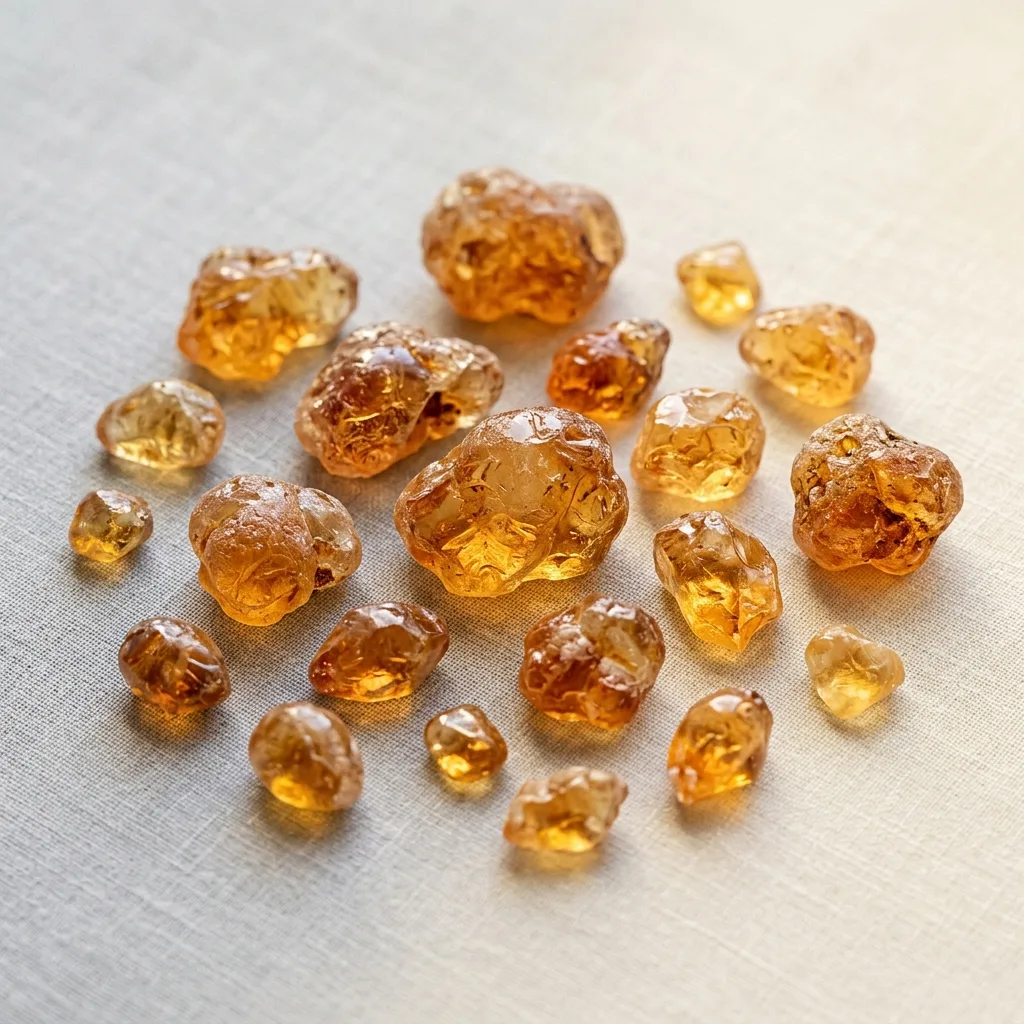
Arabic gum is a complex polysaccharide — a soluble dietary fibre harvested from Acacia tree sap, documented on Wikipedia's overview of gum arabic. Nutritionally, it's almost entirely fibre, with negligible amounts of anything else.
Macronutrient breakdown
Carbohydrates and fibre content
On a nutrition label, Arabic gum falls under the carbohydrate category as dietary fibre, since that's how soluble fibres are classified. Nearly all of its carbohydrate content is fibre rather than sugar or starch.
Protein, fat, and sugar content
Plain Arabic gum contributes negligible protein and essentially no fat. Flavoured varieties may include a small amount of added flavouring, so always check the specific flavour's label for exact sugar content rather than assuming it matches the plain variant.
How many calories are in Arabic gum?
Soluble fibres like Arabic gum generally provide fewer calories per gram than digestible carbohydrates, since most of the fibre isn't broken down and absorbed for energy the way sugar or starch is. This is a general property of dietary fibre, not a specific claim about any one product — for the exact calorie count, check the nutrition panel printed on your pack.
Is Arabic gum keto-friendly or low-carb friendly?
Because it's largely non-digestible fibre rather than net carbohydrate, Arabic gum is often considered compatible with low-carb and ketogenic approaches. Still, always check the net carbs figure on your specific pack's label to confirm it fits your particular diet plan, since labelling conventions and exact figures can vary.
Quick nutrition facts at a glance
Fibre
Nearly all of its carbohydrate content — its defining nutritional feature.
Calories
Low relative to its weight, since most of it isn't digested for energy.
Carbohydrates
Classified as dietary fibre on the label, not sugar or starch.
Protein
Negligible — it isn't a protein source.
Fat
Essentially none in the plain, unflavoured form.
Sugar
None in plain form; check flavoured variants' labels individually.
Check the Label, Try the Product
Halal-certified Arabic Gum Powder in 5 flavours — full nutrition panel printed on every pack.
How to read the nutrition label on your pack
- Check the serving size first — figures on the label are per stated serving, not per pack.
- Look at the fibre line under carbohydrates — this is the number that matters most for a fibre supplement.
- Check the ingredients list for flavoured variants — to see exactly what's been added beyond the base powder.
- Compare flavours individually — don't assume every flavour has identical figures to Original.
Buying genuine, correctly labelled Arabic gum
Accurate labelling starts with a genuine, properly manufactured product — confirm it's Halal-certified and buy through a trusted, verified provider. See our buying guide for official retail and wholesale channels across Malaysia.
The label on your own pack is always the most accurate nutrition source — general knowledge about fibre explains why the numbers look the way they do.