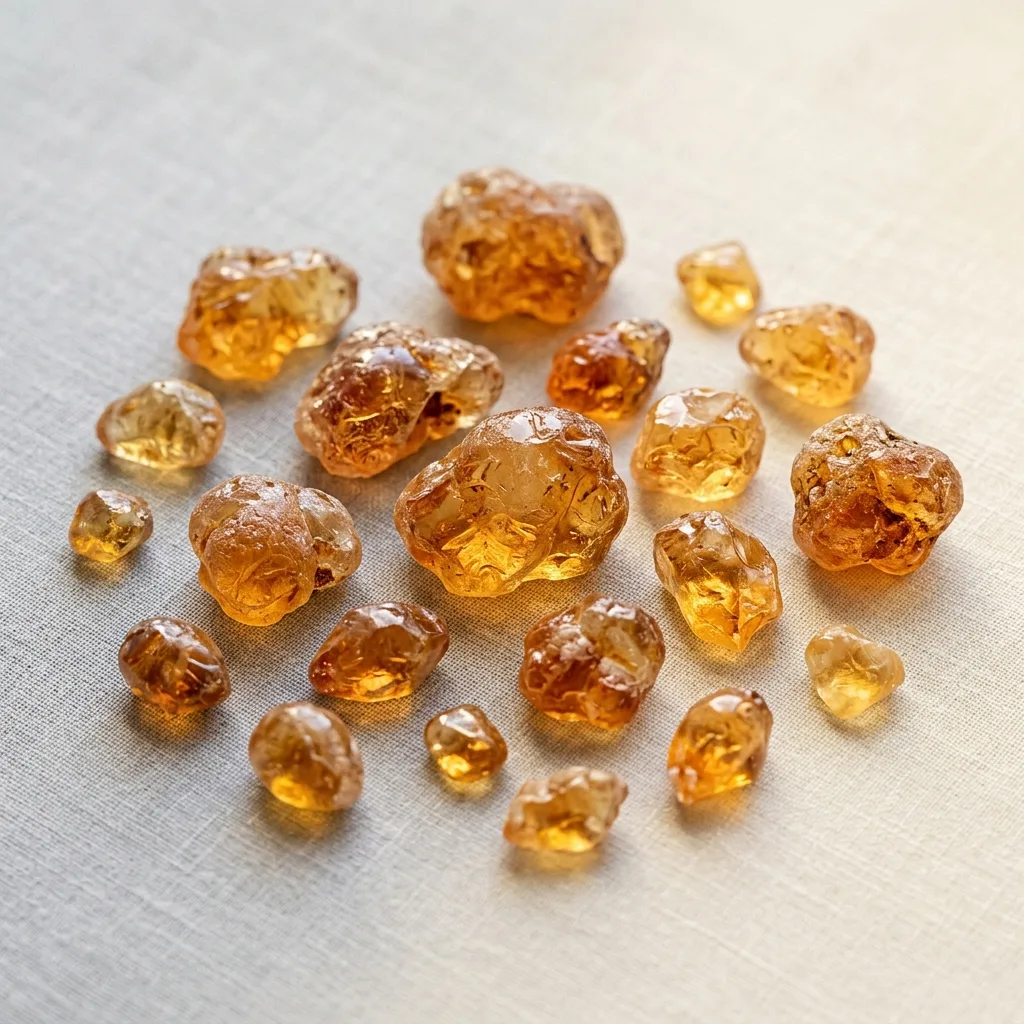
Arabic Gum is one of the more thoroughly reviewed food ingredients in use today — registered as food additive E414, recognised as a soluble dietary fibre, and assessed by EFSA, the FDA, and the joint FAO/WHO Expert Committee on Food Additives (JECFA). Here's what that actually establishes, and what it doesn't.
What is E414, and why does the classification matter?
E414 is the EU food additive code for Gum Arabic (Acacia gum), sourced from Acacia trees including Senegalia senegal. It's classified as an emulsifier and stabiliser, but also recognised specifically as a soluble dietary fibre — a distinction that matters, because not every food additive earns that classification. Arabic Gum is commonly reported to be around 85% soluble dietary fibre by composition, which is the basis for its fibre-related uses.
What have food safety authorities concluded?
EFSA (the European Food Safety Authority), the FDA, and JECFA have each reviewed Acacia gum independently. The FDA lists it as Generally Recognized as Safe (GRAS). EFSA and JECFA's reviews found no safety concerns significant enough to require setting a numerical acceptable daily intake (ADI) limit — in food-safety terms, that's a notably strong safety record, reserved for ingredients with a long, well-documented history of safe use.
E414 Additive Status
Registered EU food additive code for Gum Arabic.
~85% Soluble Fibre
The basis for its classification as a fibre source.
FDA GRAS Status
Generally Recognized as Safe by US regulators.
No Numerical ADI Needed
EFSA and JECFA found no safety concern requiring one.
Recognised Prebiotic
Classified among soluble prebiotic dietary fibres.
Ongoing Research Area
Continues to be studied as a food-science ingredient.
Shop Sihatree Arabic Gum
Halal-certified, flavoured Arabic Gum Powder — supplied by Berkat Madinah Store.
What does the research NOT establish?
It's important to be precise here: the regulatory reviews above concern food-safety status and fibre classification, not disease treatment. Some early-stage research has looked at other properties of Acacia gum in animal studies, but findings at that stage don't establish a treatment effect in humans, and shouldn't be read as one. Arabic Gum is a dietary fibre that may support a healthy routine as part of a balanced diet — not a substitute for medical care. See our safety guide for who should be cautious.
How does this connect to Sihatree's product?
Sihatree's Arabic Gum Powder is supplied by Berkat Madinah Store and carries its own JAKIM Halal certification on top of the food-safety status described here. For daily serving guidance, see our benefits and dosage guide.
A strong safety record isn't the same as a miracle claim — Arabic Gum's science is solid precisely because it stays within what's actually been established.