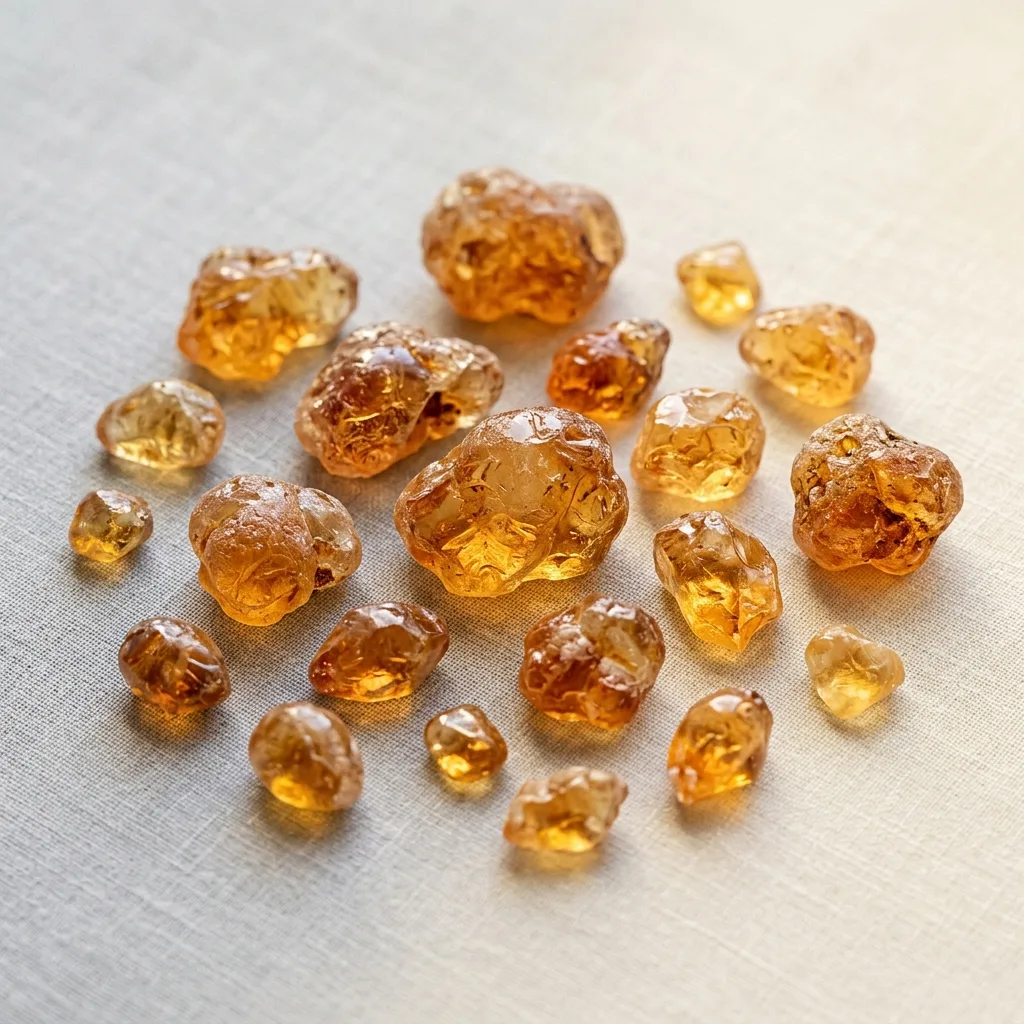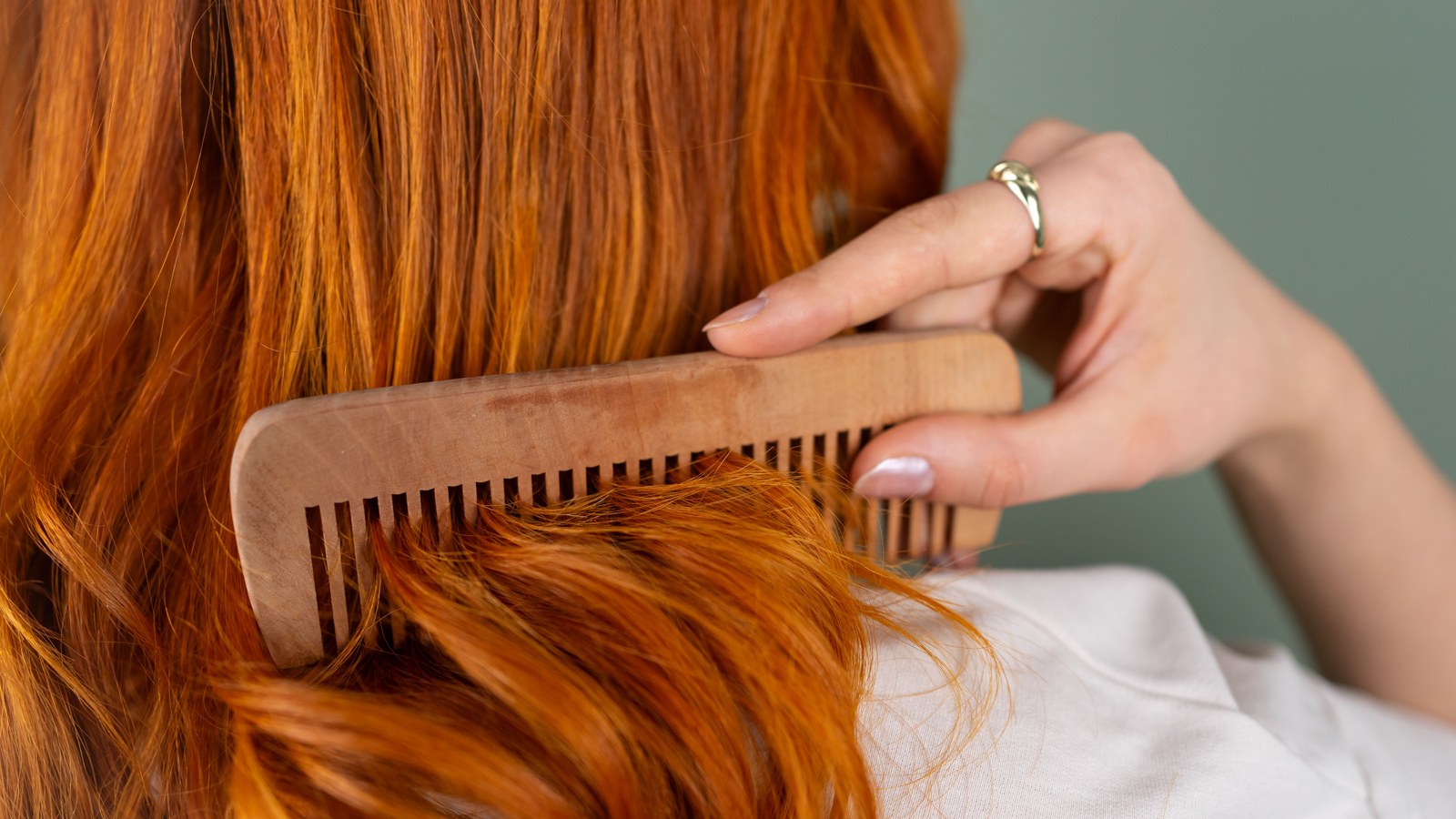
There is no proven evidence that Arabic gum stimulates hair growth, but its film-forming texture is why it's traditionally used in hair masks for a smoothing, shine-like effect. Here's what it can realistically do for hair, a simple DIY approach, and what to check before trying it.
Does Arabic gum help hair growth?
Growth and shine are two very different questions, and it's worth being clear about which one Arabic gum actually addresses.
What the evidence actually shows
There is no scientific evidence that Arabic gum stimulates hair follicles or promotes hair growth. Claims of a "growth" effect are not supported — its use in hair care is cosmetic and textural, not a treatment that affects how hair grows.
Why people use it in hair masks
As a film-forming, moisture-binding ingredient, Arabic gum can coat the hair shaft and temporarily smooth the surface, which is why it appears in some traditional and cosmetic hair formulations — a texture effect, documented as a general ingredient property on Wikipedia's overview of gum arabic.
How to make a simple Arabic gum hair mask
1. Mix
Stir powder into water until it forms a smooth, lump-free paste.
2. Apply
Work through damp hair from mid-lengths to ends, avoiding the scalp if sensitive.
3. Cover
Twist hair up or cover loosely to stop it drying out while it sits.
4. Wait
Leave for 15-20 minutes for the film-forming effect to develop.
5. Rinse
Rinse thoroughly with water until hair no longer feels tacky.
6. Patch test first
Test on skin 24 hours before applying to hair or scalp.
Sihatree Is Made for Drinking
Our Halal-certified Arabic Gum Powder, supplied by Berkat Madinah Store, is formulated as a food and drink supplement, in 5 flavours.
What it can't do
Not a treatment for hair loss
Arabic gum is not a treatment for hair loss or alopecia, and it doesn't affect how hair grows. Anyone experiencing hair loss should see a dermatologist or trichologist rather than relying on a home ingredient.
Precautions before trying it on hair
- Patch-test on skin first — wait 24 hours before applying to hair or scalp.
- Avoid it with a known Acacia or plant allergy — the same caution as with ingestion or skin use.
- Stop if you notice scalp irritation or itching at any point.
- Treat it as experimental home use, not a dermatologist-formulated hair product.
Buying genuine Arabic gum for any use
Whichever way you plan to use it, confirm any product is Halal-certified and buy through Berkat Madinah Store, the official supplier — see our provider guide for why sourcing matters.
Arabic gum can make hair feel smoother for a wash or two — it isn't going to change how fast or thick your hair grows.