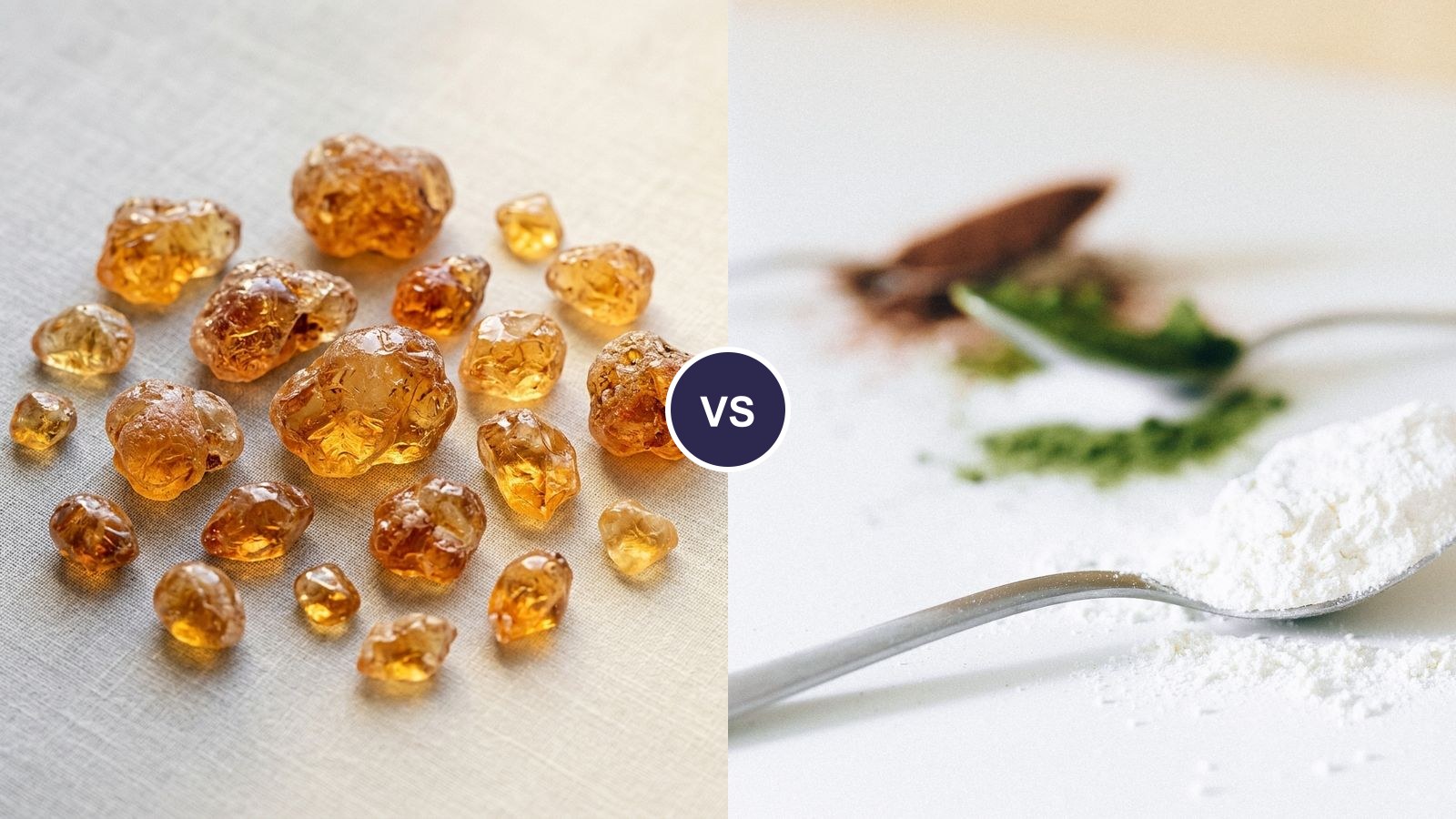
Arabic gum and inulin are both prebiotic soluble fibres, but they come from completely different plants and behave differently in the gut — Arabic gum ferments slowly with a neutral taste, while inulin ferments quickly and has a mild natural sweetness. Neither is universally "better" — the right choice depends on your tolerance and goal.
What's the difference between Arabic gum and inulin?
Both are prebiotic fibres that feed beneficial gut bacteria, but their plant source and how they behave once fermented are quite different.
Source and how each is made
Arabic gum is the hardened sap harvested from Acacia trees, documented on Wikipedia's overview of gum arabic. Inulin, by contrast, is typically extracted from chicory root or agave plants — see Wikipedia's overview of inulin for its background.
How each behaves in the gut
Fermentation speed
Inulin ferments quickly in the gut, which is a major reason it's more likely to cause gas and bloating, especially at higher doses or when first introduced. Arabic gum ferments much more slowly, which is why it's generally considered the gentler of the two.
Sweetness and taste
Inulin carries a mild natural sweetness, which is why it's often used as a low-calorie sugar substitute or texturiser in processed foods. Arabic gum is essentially neutral-tasting, dissolving into drinks without adding any flavour of its own.
Arabic gum vs inulin: quick comparison
- Source: Arabic gum comes from Acacia tree sap; inulin comes from chicory root or agave.
- Fermentation: Arabic gum ferments slowly and gently; inulin ferments fast, often causing more gas.
- Taste: Arabic gum is neutral; inulin has a mild natural sweetness.
- Best for: Arabic gum suits gentle, everyday gut support; inulin is often chosen for its sweetening and texturising properties in recipes.
Try the Gentler Option First
Halal-certified Arabic Gum Powder in 5 flavours — an easy starting point for new fibre users.
Which is gentler for beginners?
Arabic gum is generally the gentler starting point, thanks to its slower fermentation rate. See our side-effects and safety guide for how to introduce any new soluble fibre gradually and minimise bloating.
Which is better for blood sugar or low-calorie diets?
Both are generally considered to have minimal impact on blood sugar as soluble fibres, though individual response varies. Inulin's natural sweetness makes it popular in low-calorie recipe formulations specifically, while Arabic gum is chosen more for its neutral, gut-gentle profile. Anyone managing blood sugar closely should check with a doctor before adding either as a regular supplement.
Can you take both together?
Some people do combine soluble fibres, but it's best to introduce them one at a time and at a low dose each, so you can tell which one is responsible if you notice any digestive discomfort.
Buying tips for whichever you choose
If Arabic gum is the better fit for you, confirm it's Halal-certified, buy through a trusted, verified provider, and see our buying guide for retail and wholesale channels across Malaysia.
Inulin ferments fast and sweetens; Arabic gum works slowly and stays neutral — the "better" one depends entirely on how your gut handles each.