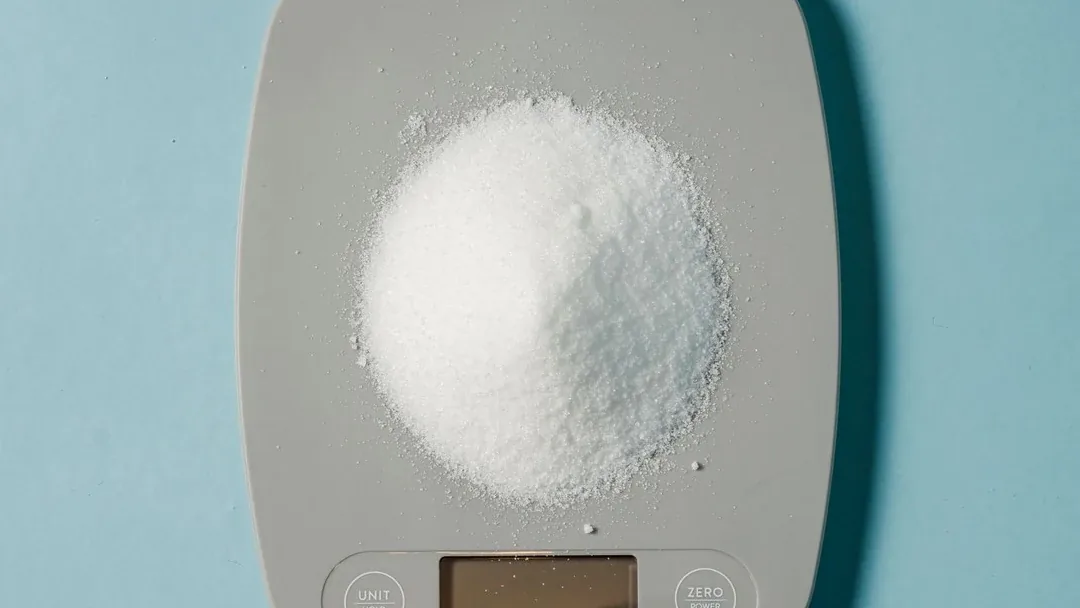

No, Arabic Gum doesn't boost metabolism or give you energy the way caffeine does. It contains no caffeine and no stimulants. It's a soluble fibre food, and any energy-adjacent effect people report is more plausibly about fullness between meals than a metabolic or stimulant effect.
Does Arabic Gum boost metabolism?
No. There's no research showing Arabic Gum changes how quickly your body burns calories, and it isn't formulated, tested or marketed as a metabolism-boosting supplement. It's a plain soluble fibre ingredient, and metabolism claims are exactly the kind of "sounds scientific" wording that outpaces what the ingredient is actually studied for.
Why the metabolism claim shows up anyway
Fibre supplements get bundled into "metabolism booster" marketing online because fibre is loosely associated with digestion, and digestion sounds adjacent to metabolism. The two aren't the same thing — digestion is how food moves through your system, metabolism is a much broader set of chemical processes — and no study connects Arabic Gum to the second one.
Does Arabic Gum give you energy like caffeine?
No. There's no caffeine, no stimulant compound and no mechanism by which Arabic Gum would deliver an energy hit. If you're looking for a caffeine-style lift, this isn't that ingredient, and it was never marketed as one.
| Claim you'll see | What can actually be said | Where that comes from |
|---|---|---|
| Boosts metabolism | Not established for this or any soluble fibre product | No metabolic-rate study exists for this ingredient |
| Natural energy booster | Contains no caffeine or stimulants; no direct energising mechanism | Ingredient composition — plain soluble fibre, E414 |
| Burns fat | Not a fat-burning ingredient; no such claim is lawful for a food in Malaysia | Food Regulations 1985 |
| Keeps you fuller for longer | Soluble fibre forming a gel-like texture in the gut is a documented general property of the fibre category | General soluble-fibre nutrition science |
Why do some people report feeling more energetic anyway?
The likeliest honest explanation is satiety, not stimulation. Soluble fibre slows how quickly food moves through digestion and can support a feeling of fullness between meals, which may reduce the "crash" some people associate with a quick swing in appetite or blood sugar. That's a satiety effect — separate from, and much less dramatic than, an energy boost.
A Plain Fibre Food, Not a Stimulant
Sihatree Arabic Gum Powder: 150 g, five flavours, zero caffeine — sold as a soluble fibre food, nothing more claimed.
Is Arabic Gum a pre-workout or performance supplement?
No, and it was never positioned as one. Some people do include it in a gym-day routine, but that's a habit-stacking choice, similar to how our active-lifestyle guide frames it — a fibre habit alongside training, not a performance product.
What would honestly change how you feel day to day?
Consistency, not any single ingredient. A fibre habit that fits into a routine without disrupting it — the same cup at roughly the same time, alongside regular meals and enough water — is more likely to feel steady than a supplement marketed for a dramatic effect it doesn't have. That's a less exciting answer than "boosts your metabolism," but it's the accurate one.
If energy dips are a recurring problem rather than an occasional afternoon slump, that's worth raising with a doctor rather than solving with any fibre powder, Arabic Gum included. A persistent low-energy pattern can have causes a supplement label can't address.
If a fibre powder claims to boost your metabolism, ask what study it's quoting. Usually, none exists.