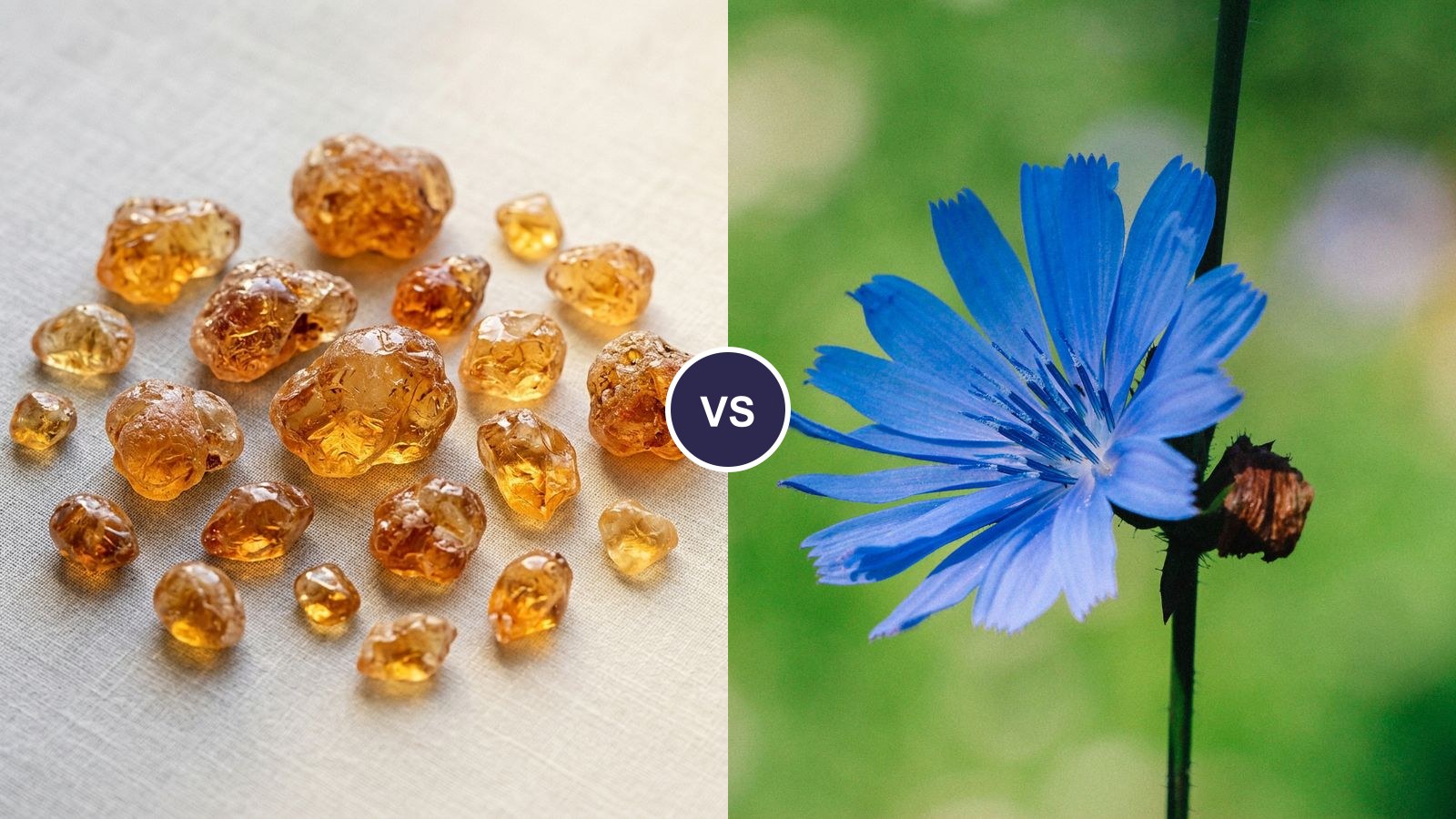
Arabic Gum dissolves completely and invisibly into water with no texture change, while chia seeds absorb liquid and form a visible gel with a distinct seed texture. Both are marketed as fibre add-ins for drinks, but they behave very differently in the glass — and neither is simply "better."
What's the difference between Arabic Gum and chia seeds?
Both get added to water, juice or smoothies as a fibre boost, but that's roughly where the similarity ends. Arabic Gum is a soluble fibre that disappears into a drink; chia seeds swell, gel and stay visibly present the entire time you're drinking.
How each behaves in a glass of water
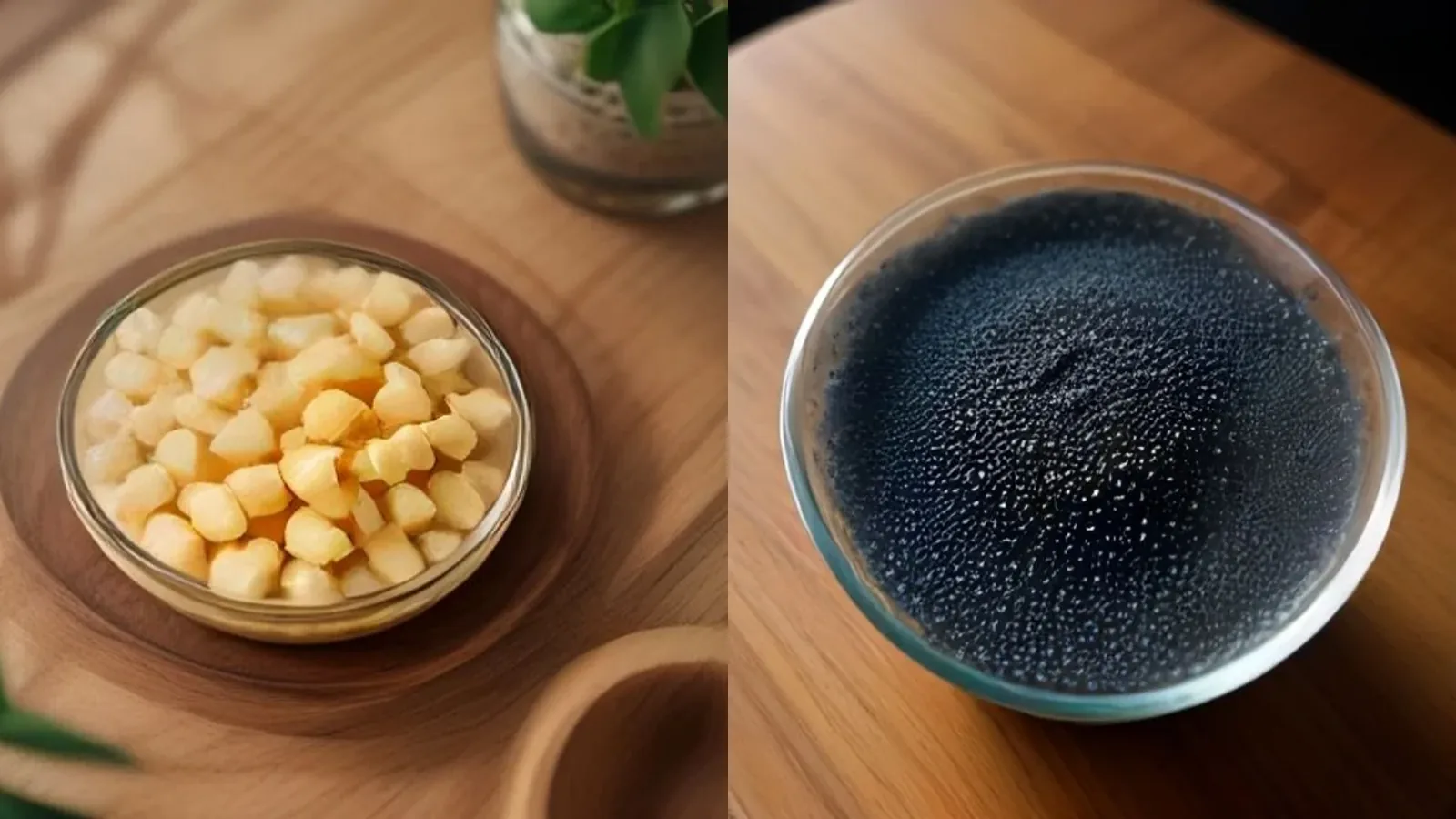
Stir Arabic Gum powder into water and it dissolves fully within seconds, leaving no grit and no change in mouthfeel — it's designed to disappear. Chia seeds do the opposite: each seed develops a translucent gel coating within minutes and stays visible, giving the drink a distinct, chewy texture that never goes away. It's a real, observable functional difference, not a claim about which is healthier.
Nutrient profile: near-pure fibre vs. a fuller nutrient package
Arabic Gum is commonly reported to be around 85% soluble dietary fibre by weight (see our scientific research overview), so it carries very little else nutritionally. Chia seeds are a different kind of ingredient: alongside a mix of soluble and insoluble fibre, they also contain fat (including omega-3 ALA) and protein — see Wikipedia's overview of chia seed. That makes chia a more nutrient-dense whole food, while Arabic Gum is closer to fibre in its purest, most concentrated form.
Arabic Gum vs chia seeds: quick comparison
- Texture in water: Arabic Gum dissolves invisibly; chia seeds form a visible gel and stay present.
- Fibre type: Arabic Gum is almost entirely soluble fibre; chia seeds mix soluble and insoluble fibre.
- Other nutrients: Arabic Gum carries little beyond fibre; chia seeds also add fat, protein and omega-3s.
- Origin: Arabic Gum comes from Acacia tree sap with Middle Eastern/North African heritage; chia seeds come from a Central American plant popularised by Western wellness trends.
Prefer an Invisible Fibre Boost?
Halal-friendly Arabic Gum Powder in 5 flavours — dissolves fully into any drink, no seeds, no gel.
Which has more fibre, Arabic Gum or chia seeds?
Gram for gram in dry form, Arabic Gum is the more concentrated source of soluble fibre, since it's reported at around 85% fibre by weight with little else in the mix. Chia seeds do contain a meaningful amount of fibre, but a large share of the seed's weight is fat and protein, so you're getting a broader nutrient package rather than a fibre-first ingredient. If your goal is a concentrated, neutral fibre add-in, Arabic Gum is the more direct route; if you want fibre alongside other nutrients in whole-food form, chia brings more to the table.
Where does each ingredient come from?
Arabic Gum is the hardened sap harvested from Acacia trees, carrying a long history of traditional use across Middle Eastern and North African herbal practices — see our traditional-use history article for that background (heritage, not a modern health claim). Chia seeds come from the plant Salvia hispanica, native to Central America and historically eaten by Aztec and Maya communities. Chia's current popularity is more recent, driven largely by Western wellness and health-food trends.
Can I mix Arabic Gum and chia seeds together?
Some people do combine the two — the Arabic Gum dissolves into the liquid while the chia seeds add gel texture on top. As with any new fibre, start with a smaller amount of each and see how your body responds before combining full servings.
So which one should you choose?
Neither is a medicine or a treatment for any condition — both are simply foods, and the right pick comes down to what you actually want, not which one is objectively "better." Want a neutral, invisible fibre boost that doesn't change your drink's texture? Arabic Gum is built for that. Want a nutrient-dense seed with fat, protein and a texture you can feel and see? Chia fits that preference instead.
One disappears into the glass, the other turns into a gel you can see — the "right" fibre depends entirely on the texture and nutrient package you're actually looking for.